

 Target beneficiaries
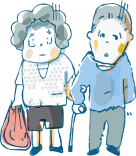
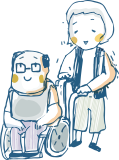
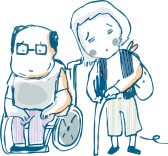
doubleton elderly
Key Service Components

Engage hard-to-reach elderly
Project partners will proactively reach out and reconnect socially isolated singleton or doubleton elderly through an array of programmes, such as roadshow, home visit, and district-based activities, etc. Community stakeholders, such as local organisations and District Services and Community Care Teams with strong neighborhood network will also be engaged to build a safety net together.
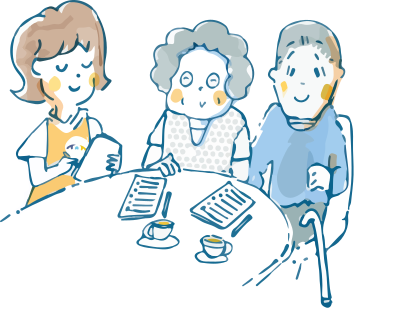
Assess service needs and make referral
Elderly individuals will undergo a structured needs assessment on their physical, mental, and social health, and service needs. Those in need will be bridged with suitable community resources and services for timely support, such as social services, elderly centres, and District Health Centres, etc. A client relationship management system will be developed to facilitate matching of appropriate services, and monitoring of service being provided to the elderly.
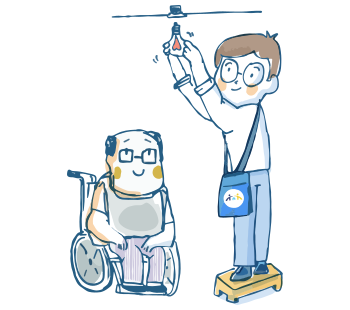
Improve home safety and environment
Project partners will assess the living conditions of the elderly households and understand the daily habits and challenges faced by the elders. Through providing minor home repairment services, essential appliances or assistive devices, and improving home hygiene, etc., the project will enable the elderly to continue to live at home safely and autonomously.
Key Project Features

Mobilising district-based networks
Mobilising district-based networks
The Project builds on the diverse strengths of NGOs and local organisations to identify and recruit isolated elders in a coordinated manner. This strategic collaboration leverages neighborhood support and community resources to establish a close-knit support network that can significantly enhance access to public services for elders.
Bridging services according to specific needs
Bridging services according to specific needs
With the comprehensive and customised service needs assessment and client relationship management system, the Project partners can identify the unique challenges faced by each elder, such as their circumstances, and barriers to accessing essential community services. This can facilitate service referrals, ensuring a timely and personalised supports on the social, mental and physical well-being of the elders.
Leveraging data analytics for future planning
Leveraging data analytics for future planning
Through data-driven approach, the Project will assess the conditions and needs of the isolated elders, such as physical and psychological functions, social connectedness and service utilisations, etc., enabling systematic analysis of service demand, availability and utilisation of services on a locality level, and provide crucial insights for informed service planning and development.